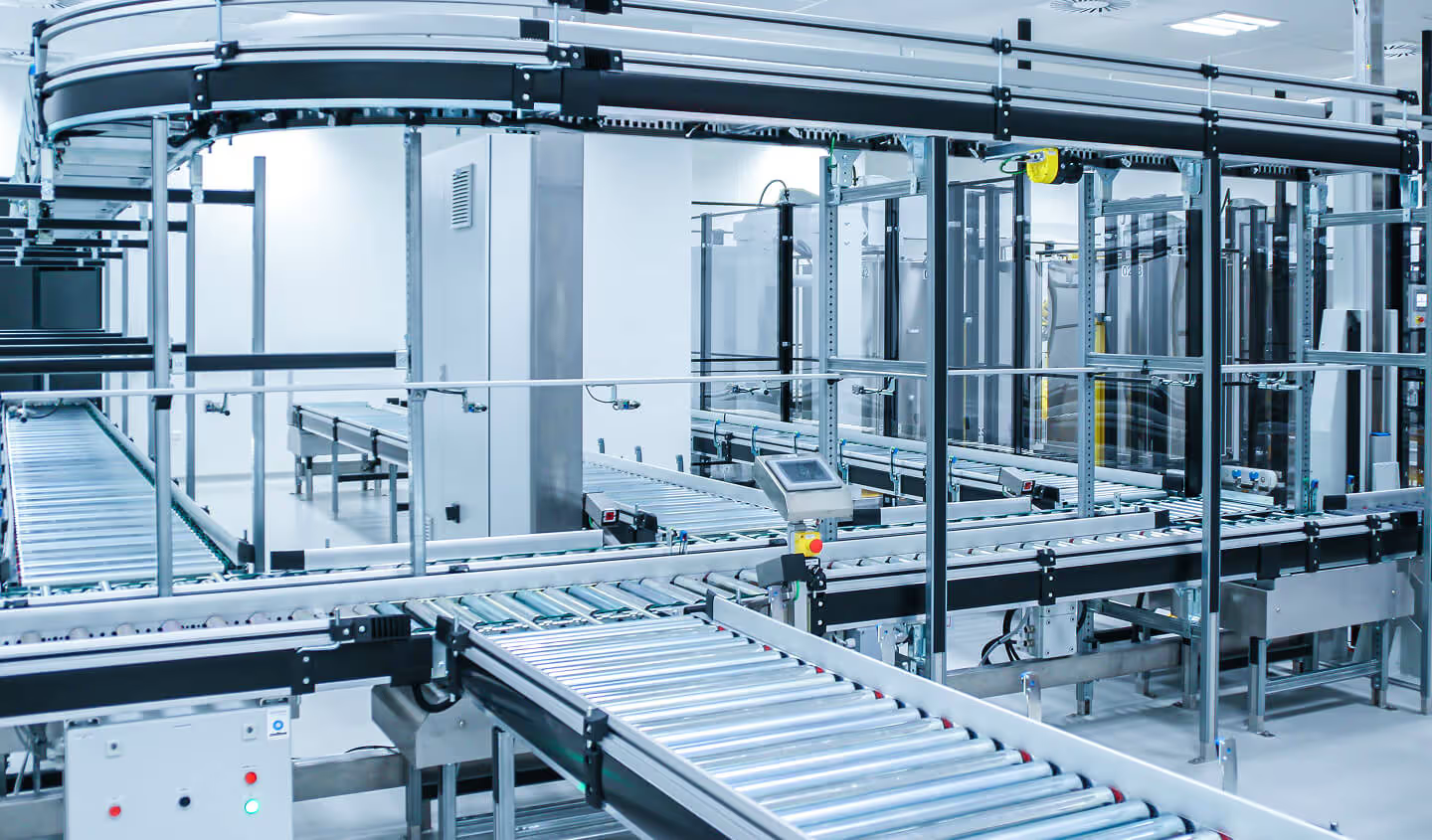
Mobile Robot Solutions for Industry and Logistics
Manually handling materials between workstations takes time and increases the risk of errors. A mobile robot takes over that transport, allowing your facility to operate more smoothly.
At Gibotech, we’ve been building mobile robot solutions for over 40 years, and we know what it takes to help production and logistics staff work smarter.
What is a mobile robot?
A mobile robot is an autonomous device that transports goods around a facility without manual control. Depending on the type, it navigates either using sensors and built-in software or by following a predetermined path.
It often adjusts automatically when the layout changes or an obstacle appears in its path. Mobile robots come in many sizes, ranging from small units designed for narrow hallways to powerful models.
Today, they are a central part of modern industrial automation. The technology is therefore suitable for virtually any production or logistics need.
What types of mobile robots are there?
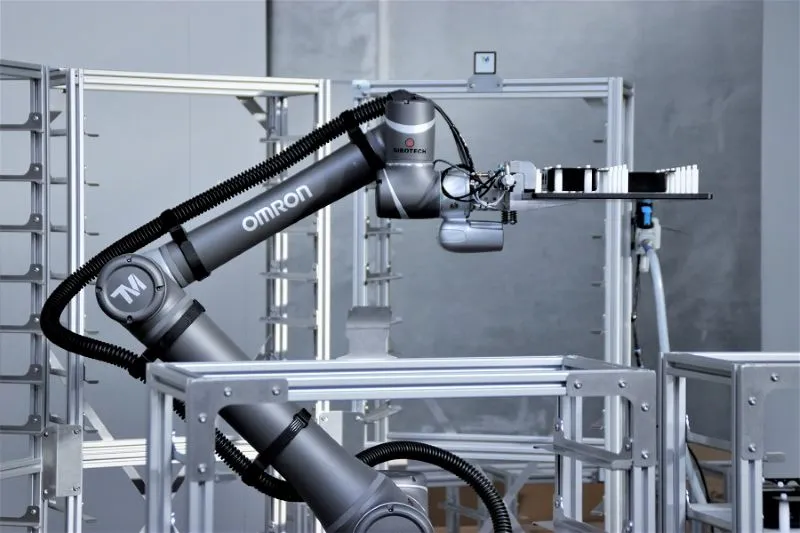
Autonomous Mobile Robots (AMR)
An AMR the facility on its own and adapts immediately if you move equipment or change the layout.
Well-known autonomous mobile robot companies such as MiR and Omron shaped this segment of the market, and a MiR robot is often used as a benchmark when evaluating other AMR.
Automatic Guided Vehicles (AGVs)
An autonomous mobile robot, such as an AGV, follows a fixed path guided by magnetic strips or laser markers rather than choosing its own route.
It is well-suited for repetitive routes in a stable environment where the layout rarely changes, and it is usually less expensive to install than an AMR. On the other hand, it typically requires more advance planning, since the route must be determined before the robot is put into service.
What are the benefits of an industrial mobile robot?
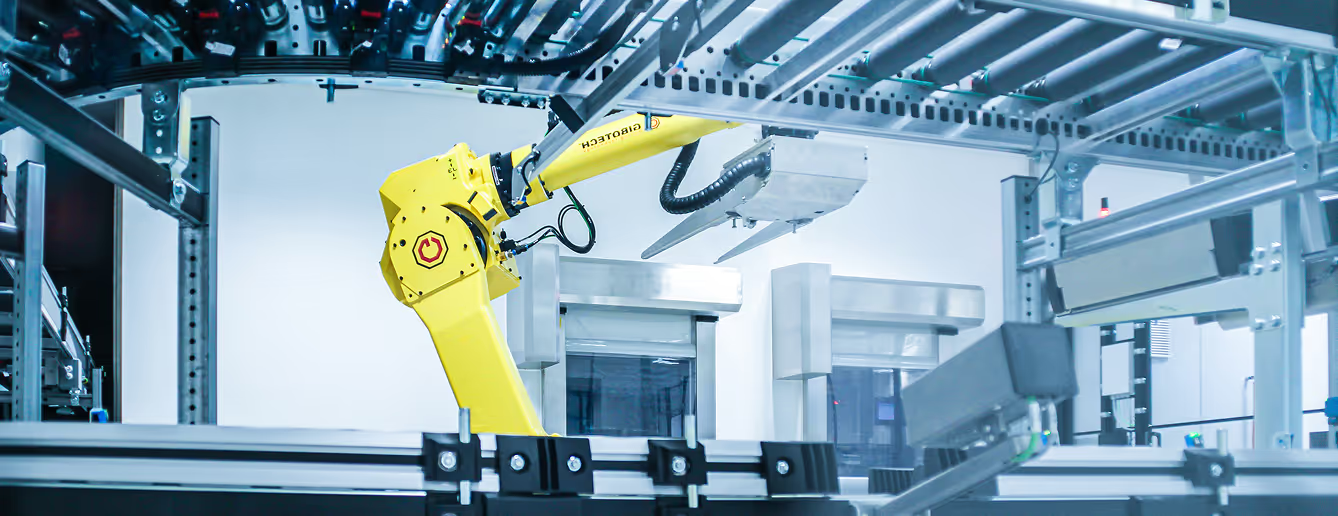
An industrial mobile robot takes over the physical, repetitive aspects of internal transportation, allowing your facility to operate more efficiently without placing an unnecessary burden on your employees. This typically provides two specific benefits:
- Fewer workplace injuries – Heavy lifting and repetitive movements are a common cause of workplace injuries. When warehouse robots take over these tasks, employees are freed up to focus on quality control and other tasks that require professional judgment.
- Stable operation – The robots maintain the same pace throughout all shifts and do not require breaks, which often results in fewer bottlenecks.
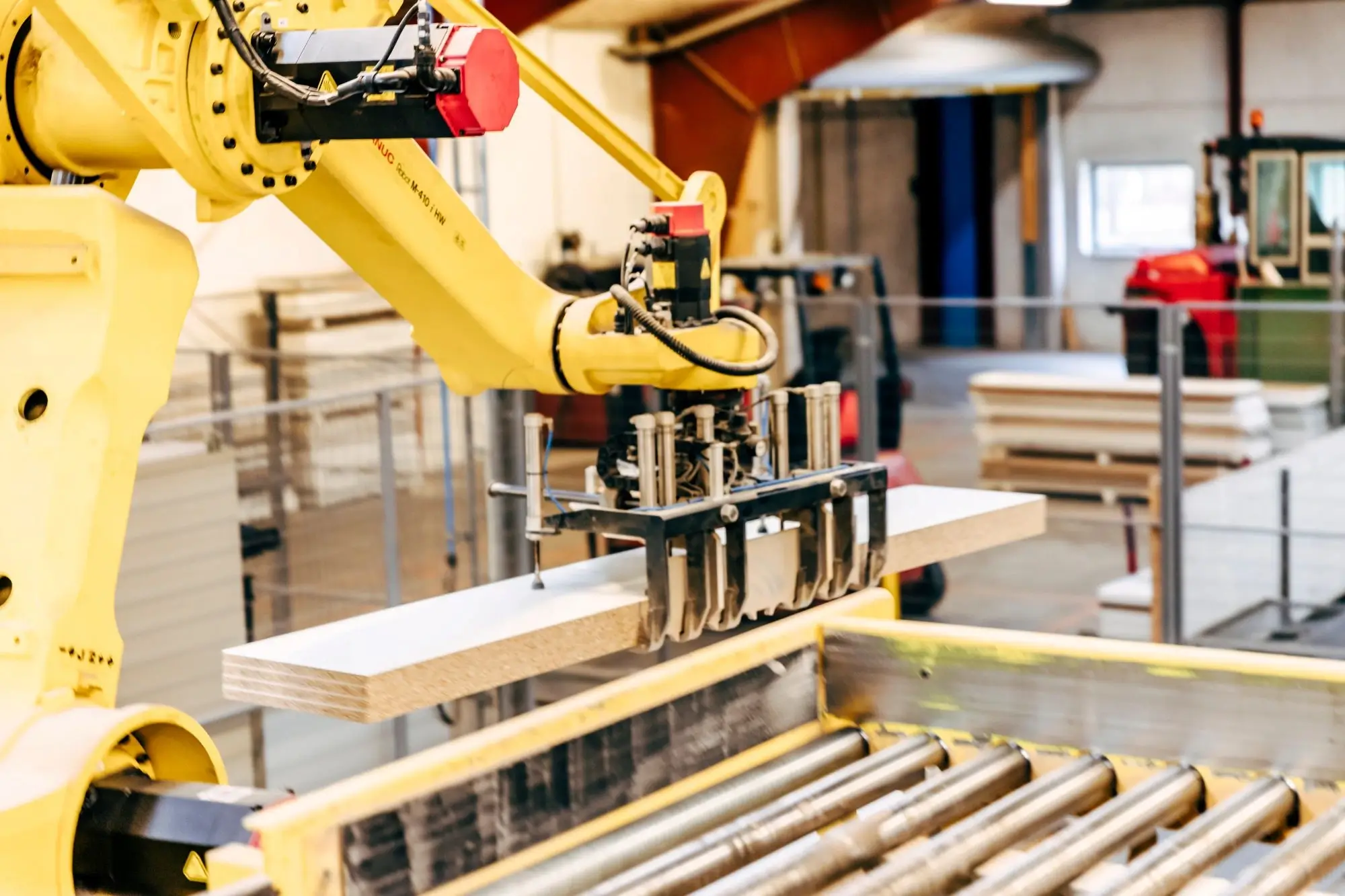
Why should you choose a solution from Gibotech?
Precision
Warehouse robots ensure high precision, high quality, and repeatable accuracy in every detail.
Productivity
Implementing automation through robots leads to greater efficiency, a better work environment, and often lower operating costs.
Improved working conditions
Automating repetitive tasks improves ergonomics and enhances employee well-being.
How is a mobile robot solution implemented?
The implementation of a mobile robot solution begins with an analysis of how goods and materials move within your facility and is often part of your broader portfolio of industrial robots. The analysis shapes the design and tells us how many robots your company actually needs. From there, the implementation typically covers three areas:
- A Customized Solution – The robot is tailored to your specific transport needs, from picking up boxes at production lines to delivering them to the warehouse.
- Simple programming – You show the robot its route during a brief training phase, after which it takes over on its own.
- Ongoing Support – We provide service and maintenance as part of our factory automation solutions, ensuring that your robots continue to operate at full capacity long after installation.