
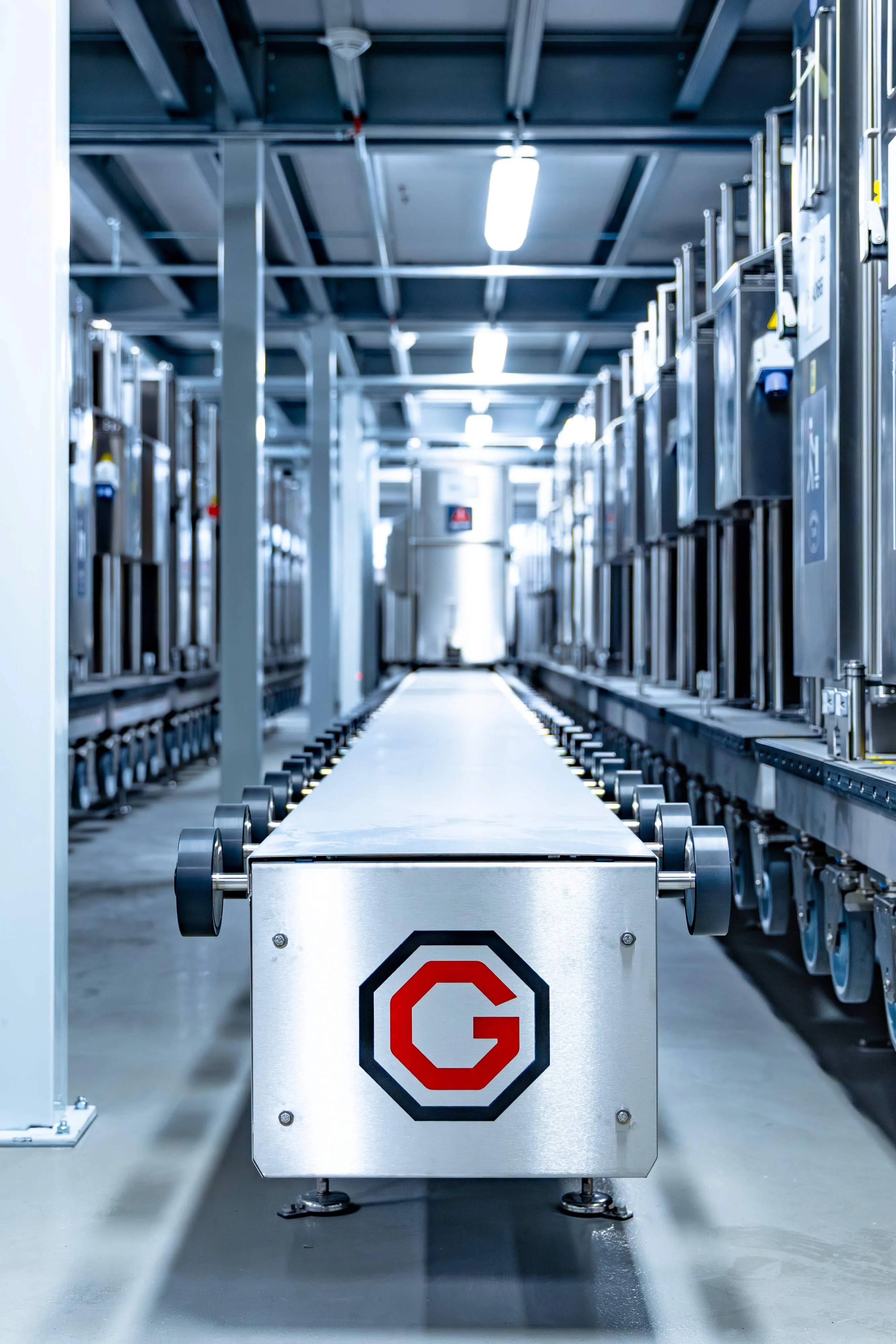
A long steel platform featuring a black-and-red G logo in a bright, industrial facility lined with rows of machines.

Automate your palletizing with a palletizing robot

Palletizing is one of the most physically demanding tasks in production. Stacking boxes, bags, or other products on pallets hour after hour takes a toll on the body and increases the risk of workplace injuries. It also limits how much you can produce, because the pace is dictated by the employees’ stamina.

At Gibotech, we supply automated palletizing robots that handle the heavy lifting and maintain the same pace all day long.

What is a palletizing robot?

A palletizing robot belongs to the group of industrial robots but is specialized in automating the stacking process on pallets. It handles everything from light packages to heavy products and places them in precise patterns. Typically, the robot can handle multiple product types on the same line and switch between them without significant changeover time. This makes the robot flexible enough to keep up when production changes.

What do you get with a palletizing robot from Gibotech?

With a palletizing robot from Gibotech, you get a complete package—robot, grippers, software, and integration—all in one system, so you don’t have to piece together a solution from multiple suppliers. Our proprietary solution, GiboPalletize, is customized to the products you need to handle. If your production grows in the future, the solution can scale with you.
Contact us for more information
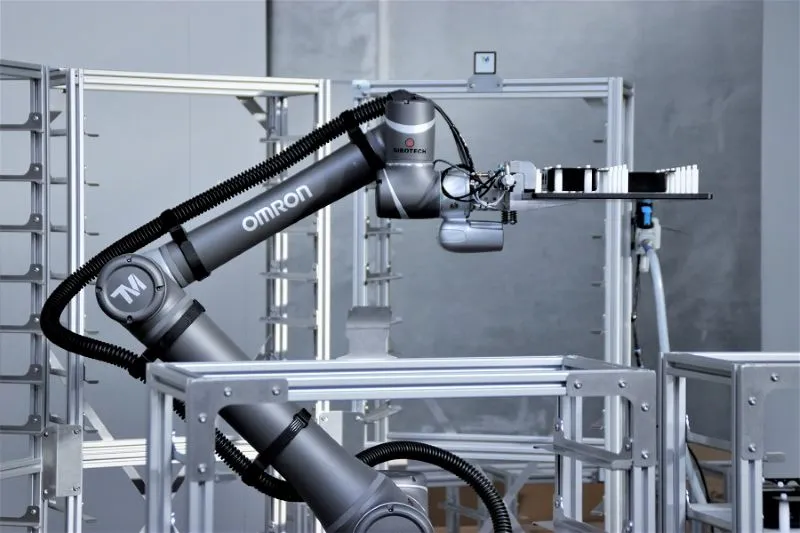
An OMRON robotic arm holding a platform with rows of white objects in an industrial setting.

What are the benefits of an automated palletizing robot?

A Better Work Environment and Fewer Injuries

When a palletizing robot takes over the heavy lifting, the risk of strain injuries drops significantly. Back and shoulder problems are among the most common work-related injuries in the manufacturing industry, but when the robot handles the lifting, employees are spared the daily strain.

Higher productivity and continuous operation

An automated palletizing robot works without breaks, lunch, or holidays. Depending on the configuration, it can handle several hundred products per hour—and maintains the same pace around the clock if production requires it.

Precise and Consistent Stacking

The robot places the products in exactly the same spot every time, pallet after pallet. The result is stable loads that do not shift or tip over during transport, which means fewer damages to the goods when they arrive.

Flexible adaptation to changing needs

The robot can be reprogrammed for new product sizes and patterns. If you change your packaging or product line, the robot adapts without requiring you to invest in entirely new equipment. This makes the robot a long-term investment that will continue to provide value even when your production process looks different in a few years.
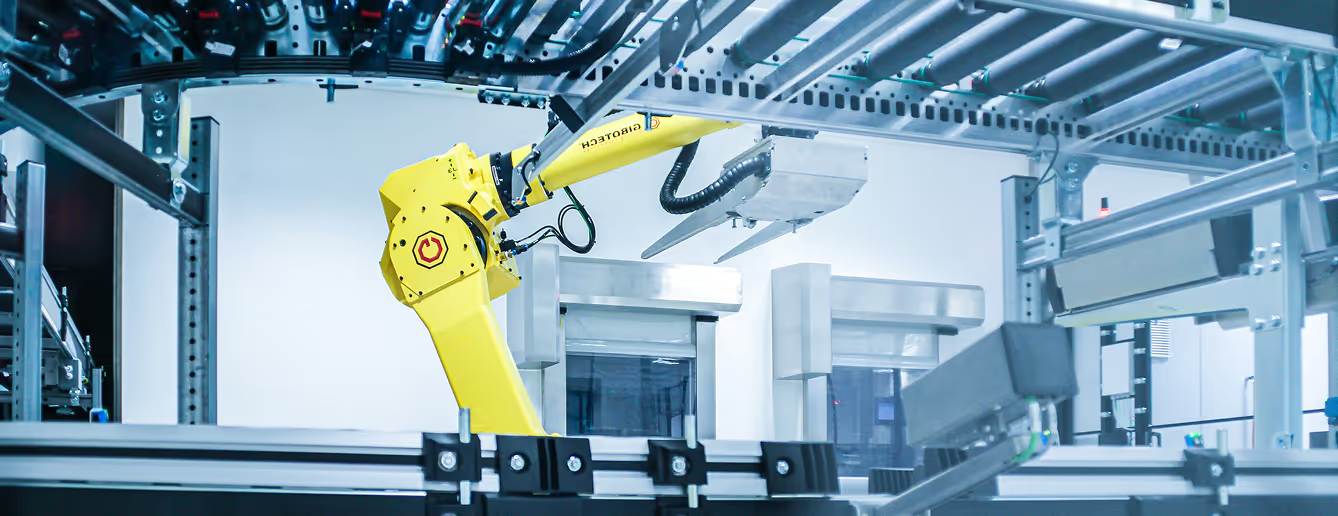
A yellow industrial robot arm in a modern factory surrounded by metal frames and machinery.

Get Started with Automated Palletizing

With over 40 years of experience in industrial automation, Gibotech combines modern robotics technology with practical production expertise. We don’t design a one-size-fits-all solution—we find the solution that fits your production needs and follow up with service and maintenance to ensure your system runs reliably for many years. Contact us, and let’s explore how a palletizing robot can reduce the workload on your employees and boost productivity.
Contact us
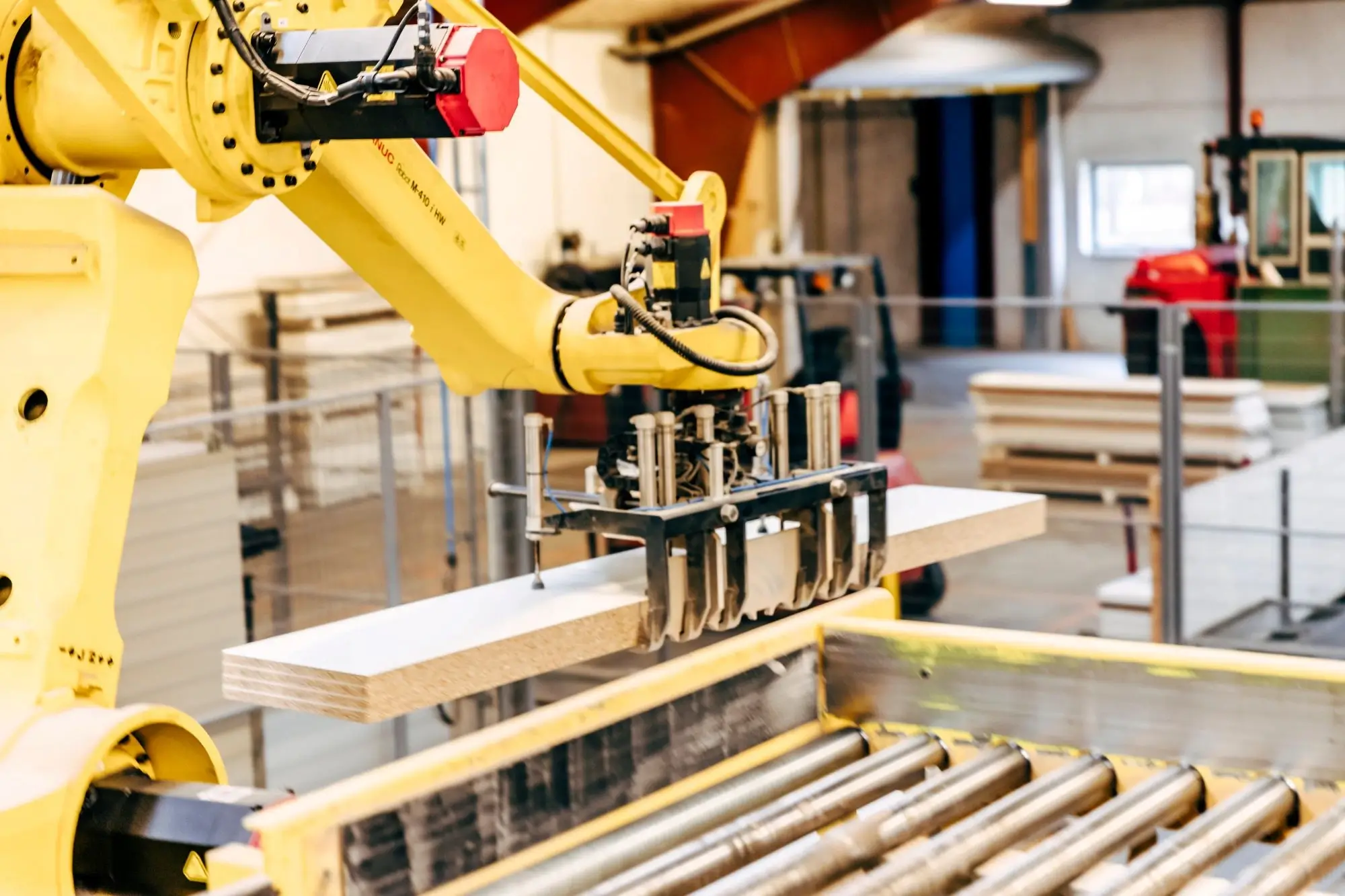
A robotic arm handles a wooden panel on a production line with rollers in a factory.

Why should you choose a solution from Gibotech?

Precision

Warehouse robots ensure high precision, high quality, and repeatable accuracy in every detail.

Productivity

Implementing automation through robots leads to greater efficiency, a better work environment, and often lower operating costs.

Improved working conditions

Automating repetitive tasks improves ergonomics and enhances employee well-being.
Frequently Asked Questions 

What is automated palletizing, and how does it work?

Automated palletizing means that a robot takes over the task of stacking products onto pallets. The robot receives products from the production line, picks them up with a gripper, and places them in a preprogrammed pattern. When the pallet is full, it is moved away, and a new one is positioned in its place.

Why Should Manufacturers Automate Palletizing?

Manufacturers should automate palletizing because it is physically demanding and repetitive work with a high risk of injury when performed manually. Automation makes the process faster and more consistent, while freeing up employees to take on other tasks in production.

How can a palletizing robot be customized?

A palletizing robot is customized by selecting the robot type, gripper, speed, and programming. The solution is designed based on your products, production speed, and available space, and can be upgraded later if your needs change.

What software and hardware do I need for a palletizing system?

An automated palletizing system requires hardware such as the robot itself, grippers, conveyor belts, a safety system, and a pallet magazine. In terms of software, you’ll need a programming tool for palletizing patterns, as well as integration with production management and monitoring systems.

Does a palletizing robot have any limitations?

Palletizing robots have limitations when handling very fragile or irregularly shaped products, which may require specially designed grippers. There are also limits on product size and weight, which are clarified as part of the consultation before the solution is designed.

Do small and medium-sized businesses need a robotic palletizing system?

Small and medium-sized businesses can certainly benefit from a robotic palletizing system. A collaborative palletizing robot requires less space and a lower investment, making automation accessible even if you have a limited budget or floor space.

Does the robot work alongside the staff?

A collaborative palletizing robot is designed to work safely alongside employees and automatically stops in the event of unexpected contact. A traditional palletizing robot typically requires safety fencing around the work area.

How much space does the robot take up?

Space requirements depend on the configuration. A compact palletizing robot in a cobot version can operate in just a few square meters, while a high-performance palletizing system requires more space. The solution is designed based on the space you have available in your production facility.

Would you like to learn more about how we can help you?

We specialize in streamlining our clients’ workflows and processes through the use of robots and automation, and we’d love to help you too! We’re always open to a no-obligation conversation about your current situation and how our solutions can help improve it.

Thank you very much! We have received your message and will get back to you as soon as possible.
Oops, something went wrong! Please try again.
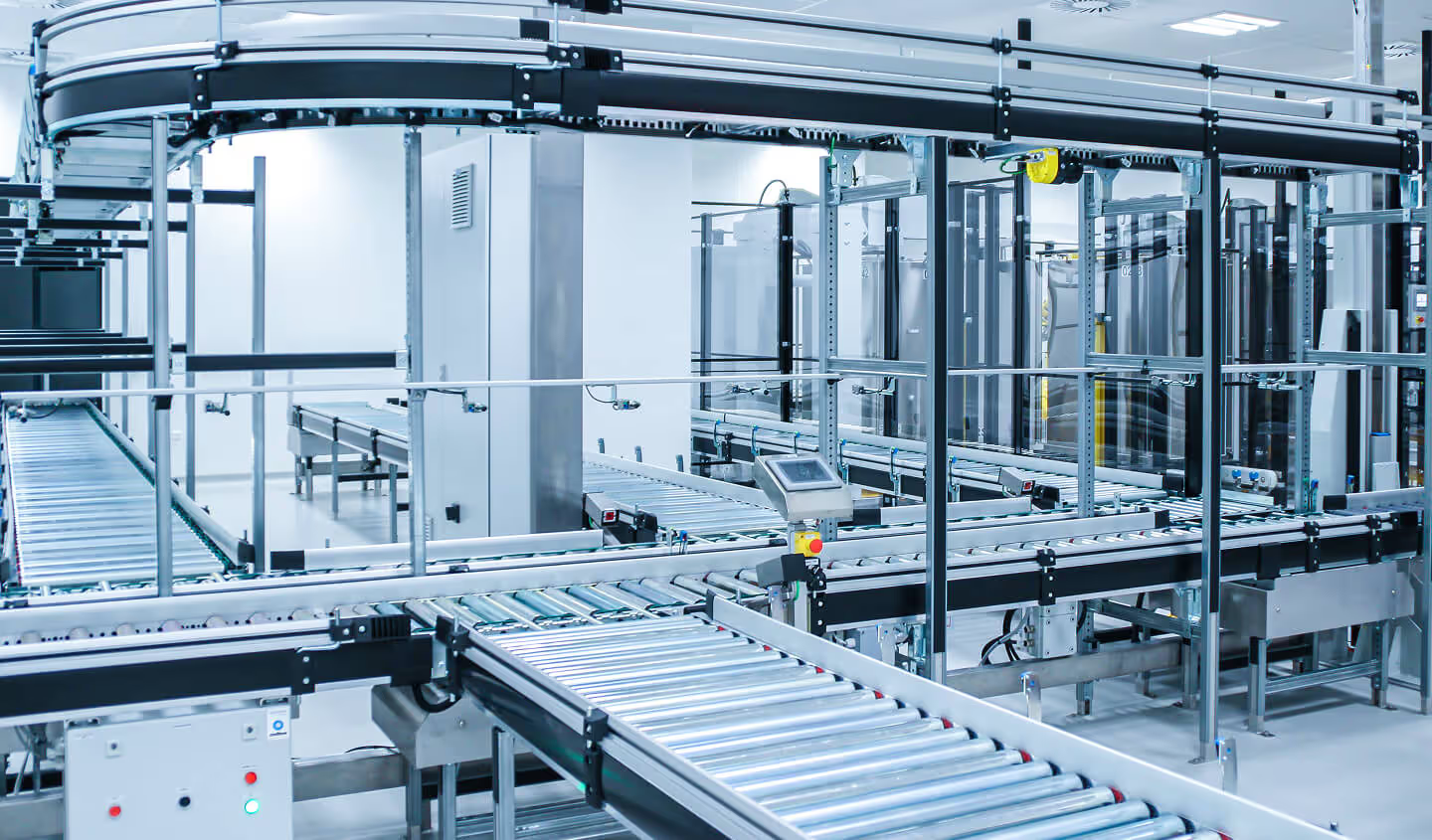
Industrial conveyor belt system in a clean, modern factory setting without any goods.