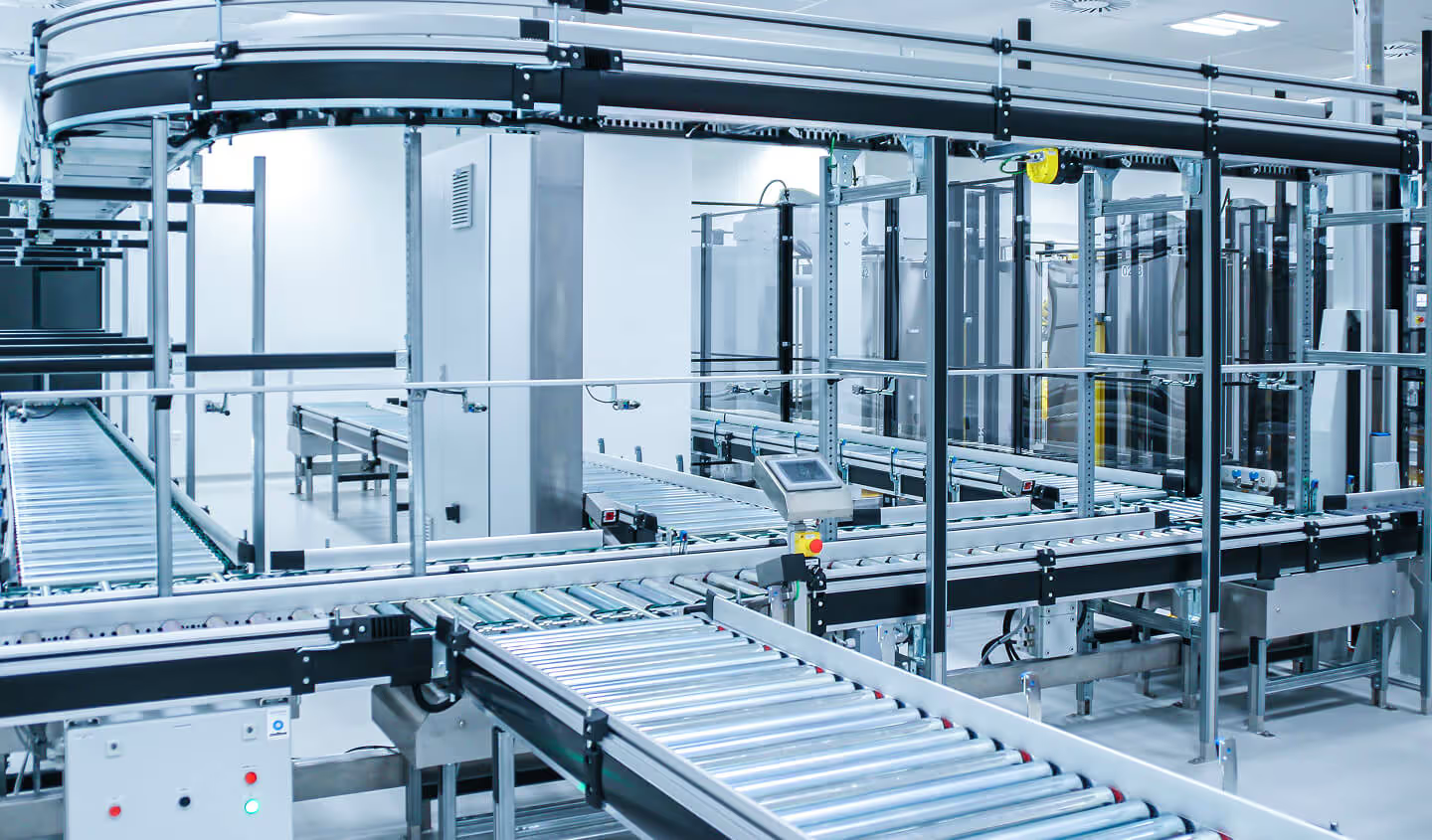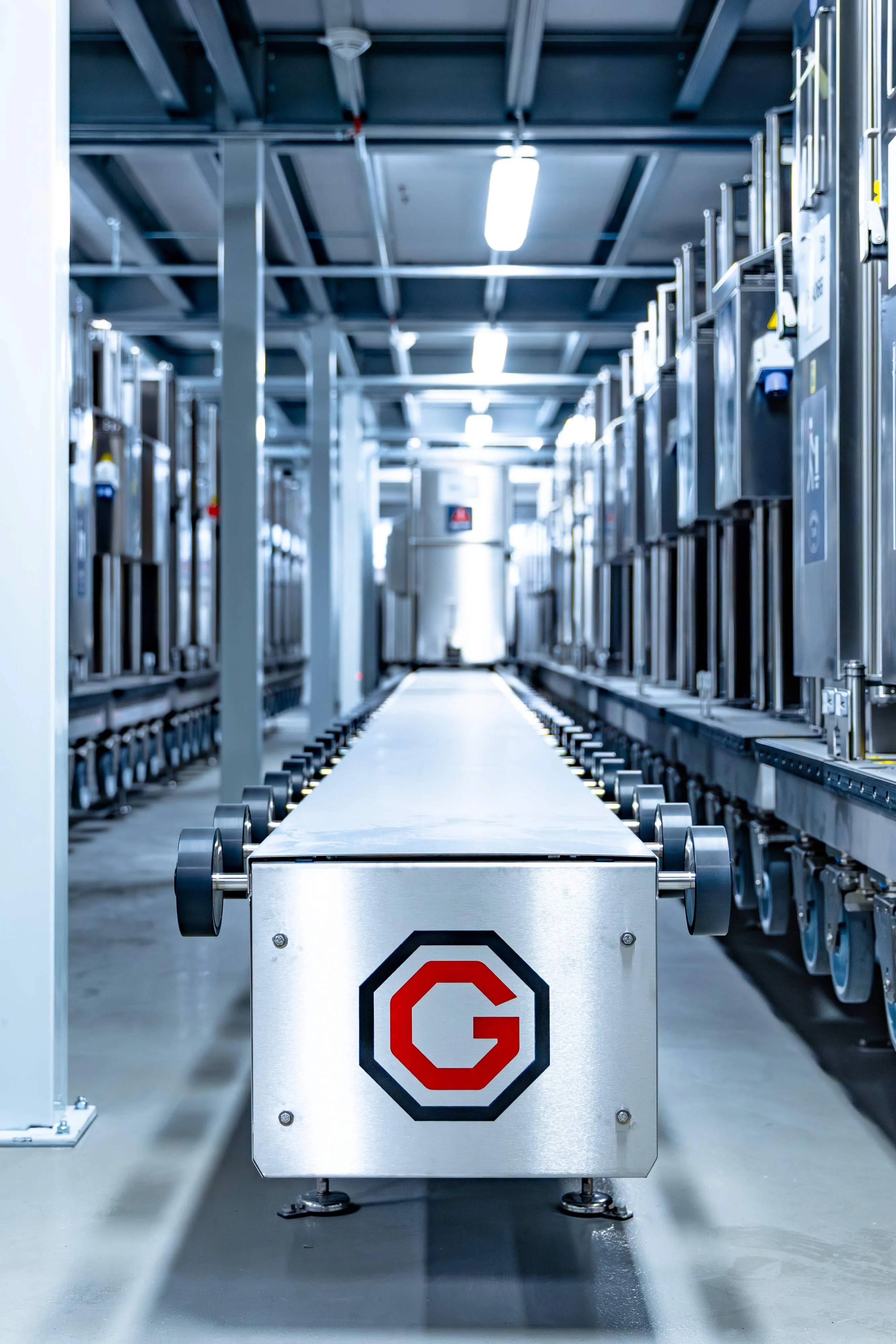
Factory Automation for Modern Production Lines
Factory automation helps you produce faster, with greater precision, and at a lower cost. At Gibotech, we develop systems in which robots, software, and safety solutions work together to ensure that your production runs efficiently around the clock without unnecessary downtime.
The systems can adapt to your production needs, ensuring you remain efficient both during slow periods and at peak times.
What is factory automation?
Factory automation encompasses the machines, robots, and systems that perform production tasks with minimal human involvement. It can range from a single automated task to a fully automated production line.
The systems typically work together through shared software and control systems, allowing different machines and robots to coordinate their actions throughout the production process.
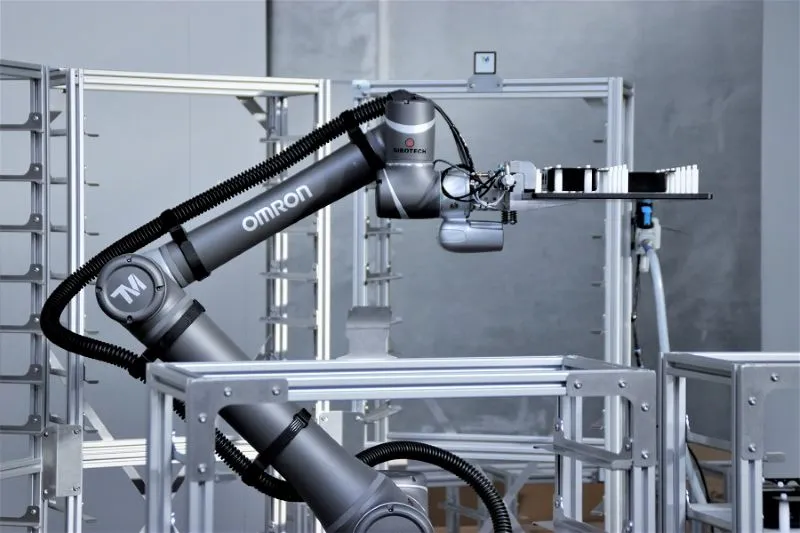
What types of robots are used in factory automation?
Industrial robots for factory automation typically include cobots, mobile robots, warehouse robots, and palletizing robots, each of which is well-suited for different tasks.
Cobots
Cobots are collaborative robots designed for tasks where humans and machines work side by side. You can quickly move and reprogram them between different workstations, making them well-suited for smaller batch sizes or production lines that change frequently. Because they are designed to work safely in close proximity to people, you can often integrate them without setting up separate safety cages around the workstation.
Mobile robots
Mobile robots, such as MiR units, transport materials around the factory without fixed tracks, and they automatically adjust when the layout changes. They navigate using built-in sensors instead of magnetic strips or tracks, so you can move production equipment or add new routes without having to reprogram the entire fleet.
Warehouse Robots
Warehouse robots are mobile robots specifically designed for warehouse logistics that handle the movement and storage of materials and finished goods, giving you a clearer overview of your warehouse. They handle tasks such as picking, transport, and stacking, which reduces manual handling and helps you track inventory more accurately across your warehouse areas.
Palletizing Robots
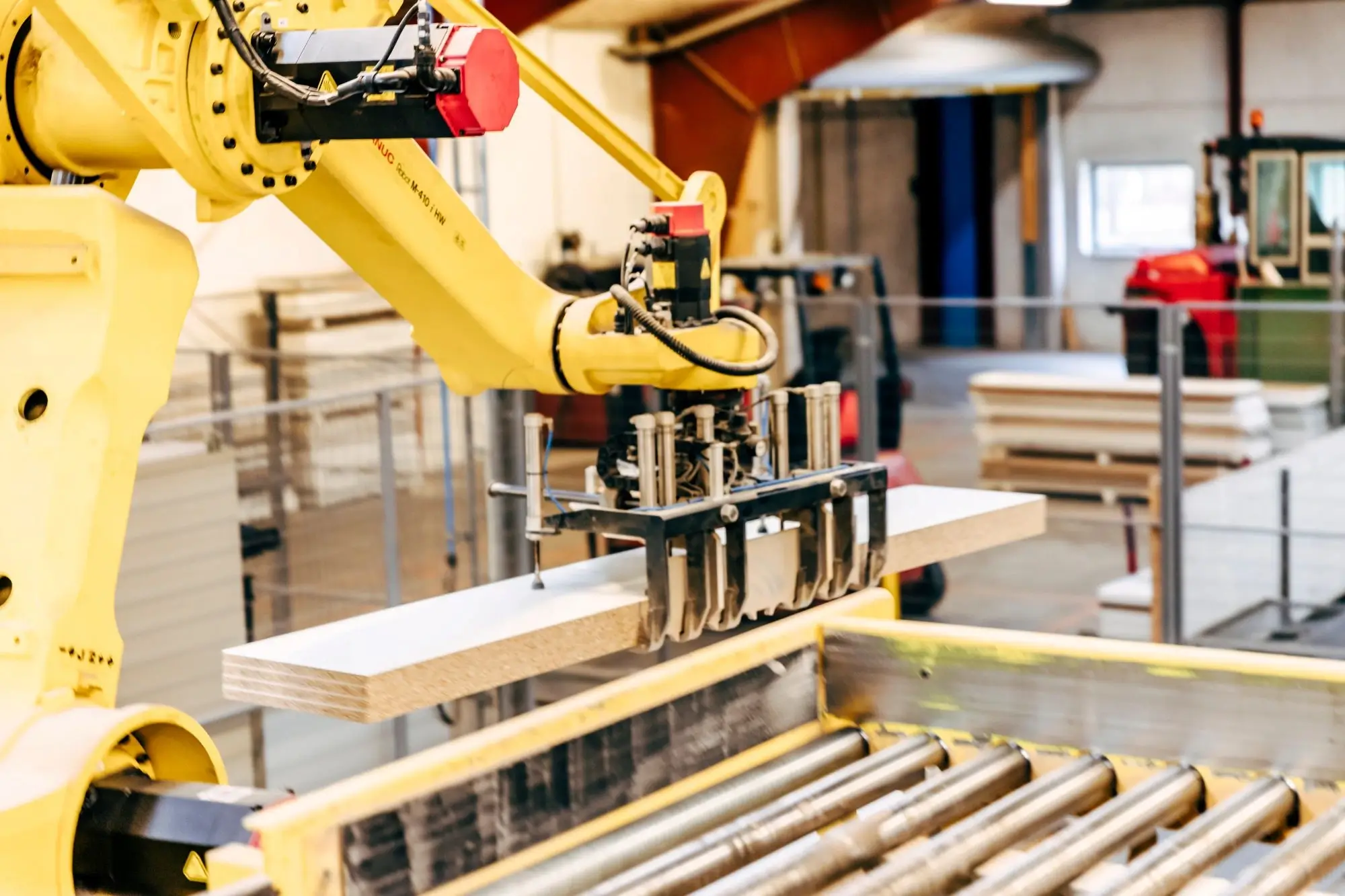
Palletizing robots handle the stacking and arrangement of products on pallets and can be configured for different pallet sizes and formats. This makes them useful in the final stage of a production line, where stable and uniform pallets reduce the risk of damage during storage and transport.
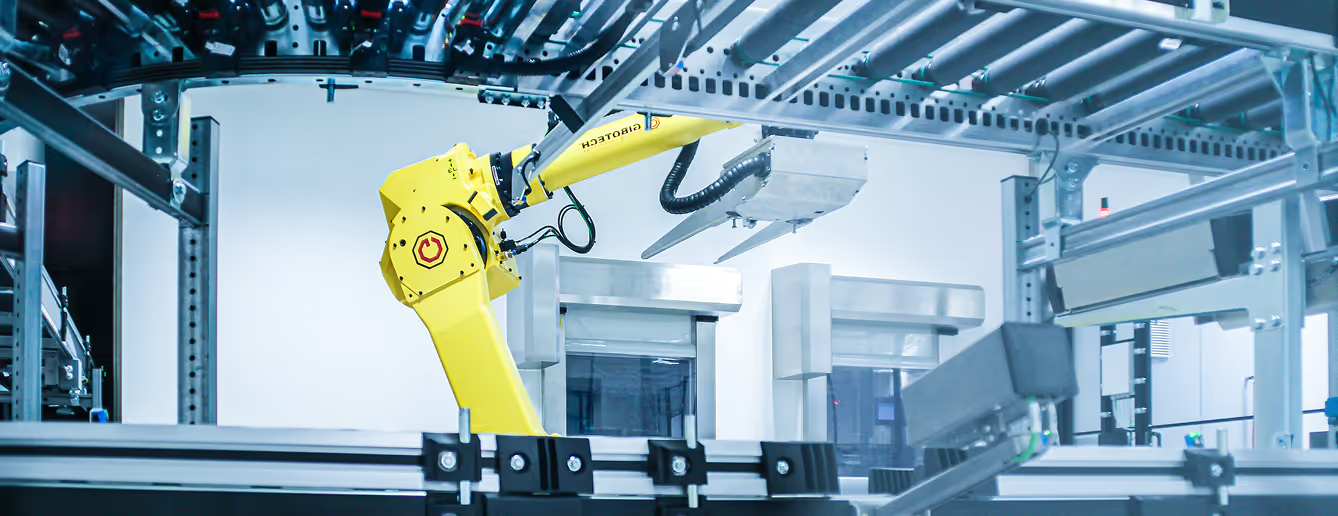
What are the options for factory automation?
We offer industrial automation solutions ranging from standalone robot cells to complete production lines.
- GiboPalletize – Automates palletizing across product types
- GiboPack – Handles the packaging process from start to finish
- GiboMove – Handles internal transport between production zones
- GiboBox – Handles packaging and box handling
- GiboStorage – Automatically organizes storage space
Each of these systems can run independently or be combined into a comprehensive solution, allowing you to scale as your needs grow.
Why should you choose a solution from Gibotech?
Precision
Warehouse robots ensure high precision, high quality, and repeatable accuracy in every detail.
Productivity
Implementing automation through robots leads to greater efficiency, a better work environment, and often lower operating costs.
Improved working conditions
Automating repetitive tasks improves ergonomics and enhances employee well-being.
What are the benefits of factory automation?
Factory automation changes the way your production operates, and the benefits are measurable:
- Higher output —Robots work consistently across multiple shifts, allowing you to make the most of your existing floor space
- Fewer errors —Automated processes repeat the same steps precisely, which reduces waste and rework
- Better working conditions —Machines take over heavy lifting and repetitive tasks, allowing your employees to focus on tasks that require judgment and expertise
- Lower costs in the long run - Many companies recoup their investment within a few years through lower labor costs and increased capacity