A whole new world: The AGVs are up and running in Gødstrup
January 14, 2026
Hospitals & Healthcare
You are always welcome to contact us
We are always ready to help and guide you with expert advice and feedback.

The Odense-based automation specialist is solidifying its position in the healthcare sector. This time with autonomous forklifts at the New Hospital in the West.
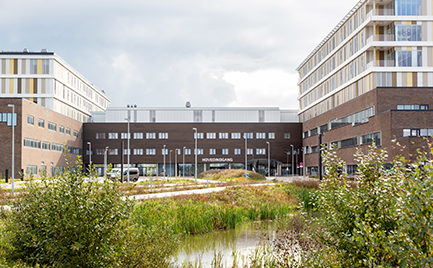
How does the AGV system work, and how can we coordinate our workflows so that the logistics of goods delivery run smoothly? These were some of the questions that the employees from the operations department were tasked with answering during their visit to Gødstrup
Gibotech has already installed central sterilization units and receiving areas at Rigshospitalet and in Herlev and Gødstrup. In 2020, the company entered the German market and is currently installing central sterilization units in Kiel and Lübeck. That’s why we have answers to all the questions that naturally arise when staff are getting to know the autonomous trucks.
Top-notch security
When the AGVs are moving around in the basement of the hospital, safety is well taken care of.
Both on top and near the wheels, it’s packed with sensors that ensure the robot always knows where it is and doesn’t run into anything—and on the sides and back, the red emergency stop buttons stand out clearly so they’re easy to find should something go wrong.
First encounter with the robots
However, it can be a bit overwhelming to encounter this new technology for the first time.
"It's going to be quite a puzzle," says Majbrit Rosenvinge Nielsen, a warehouse worker in Holstebro, as she and a group of colleagues visit Gødstrup for the first time to see what will hopefully become one of their most important tools in the future. During the visit, they are shown the workflows for how the AGV system automatically assigns the carts from the Regional Warehouse a specific spot on the floor, once the service assistant has ensured that both the barcodes on the cart and on the delivery slip have been scanned. Then the AGV can find and retrieve the cart on its own when it becomes available after a trip.
"It's quite a challenge, but once you get the hang of it and get started, it'll all work out," says Majbrit Rosenvinge Nielsen, adding:
This is going to be really exciting. As things stand now in Holstebro, we move all the carts loaded with goods by hand. It’s hard work. An empty cart weighs 150 kg. With this system, we’ll probably notice that we’re not getting as worn out anymore.
Majbritt Rosenvinge Nielsen, warehouse worker at Gødstrup Regional Hospital
Taking the elevator all by myself
The AGVs move around in the basement beneath the hospital, but they also come up to the surface. This is because special elevators have been installed specifically for them. In practice, this means that when the robots reach the elevator, no human intervention is required. It can drive into the elevator on its own, and the doors close automatically behind it. When the mobile robot reaches its programmed destination and floor, it continues into a special AG room behind the elevators, where it can unload its goods and, if necessary, take an empty cart back to Servicebyen, where it came from.
- We have now completed so many goods receiving facilities at hospitals both here in Denmark and abroad that we are beginning to establish standards and draw on our experience to secure even more hospital contracts. Most recently, we received two major orders from NytOUH, where we will build both a central sterilization unit and a goods receiving area. Today, approximately 70% of our revenue comes from the hospital sector, while the remaining 30% comes from industrial automation, says Mikkel Bjerregaard, CSO at Gibotech.