Are robots ergonomic?
January 15, 2026
Hospitals & Healthcare
You are always welcome to contact us
We are always ready to help and guide you with expert advice and feedback.

Can robots, automation solutions, and ergonomics be combined? If you ask us, investing in robots and automation inevitably leads to improvements in ergonomics and the work environment.
You’re probably starting to consider an automation solution for your hospital because you want to streamline certain workflows. But what if we told you that you’d actually get improved ergonomics as part of the package?
Of course, it is not the robots and automation themselves that are ergonomic or perform the work in an ergonomically correct manner. Ergonomics are improved because robots take over tasks that might otherwise be potentially non-ergonomic, or because they help perform the task in a way that is far less physically taxing.
Of course, all processes and solutions are tailored to the specific hospital and its needs, but the benefits remain the same.
Here’s how some automation solutions improve ergonomics.
Adjustable workbenches
You’re probably familiar with standard height-adjustable desks that are operated manually. But it’s possible to get work tables or workstations where the height, brightness, and possibly other settings adjust automatically when the employee logs in with their ID. That way, you can be sure the height is always right, and that the brightness is sufficient and angled correctly.
Rail systems for transporting carts
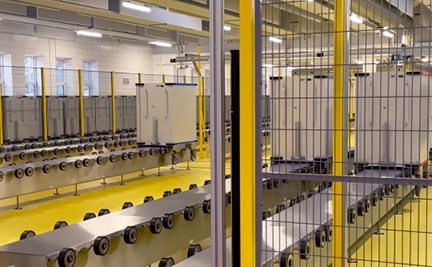
Carts carrying goods, tableware, linens, and other items can be heavy to push. On routes that the carts must always travel, it is therefore beneficial to install conveyor tracks. The conveyor tracks then handle the transport back and forth. If there are multiple conveyor tracks, they can be programmed to prioritize certain carts and move them to the front if necessary.
Robots that open and unload carts
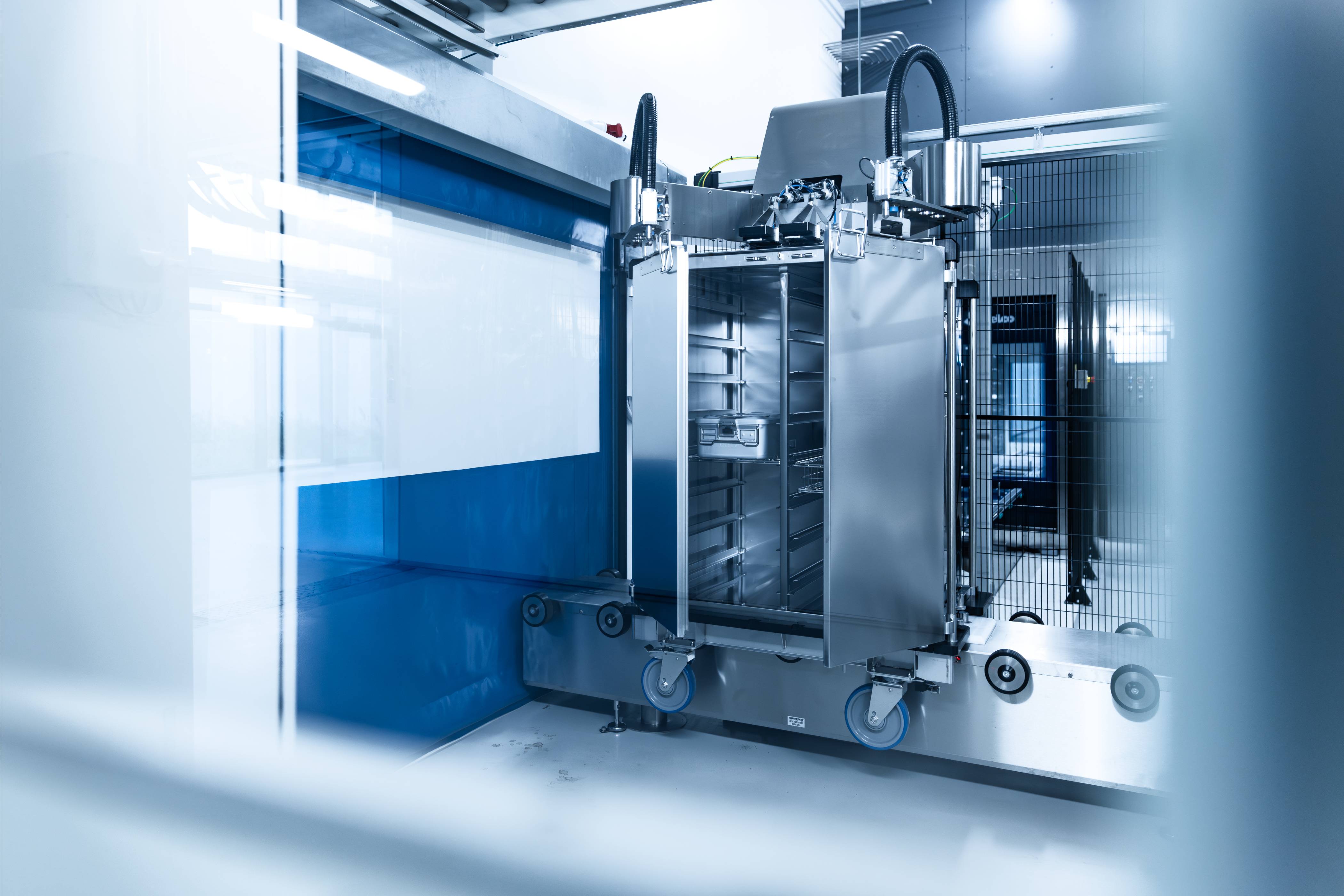
Opening and emptying carts of materials is a necessary task, but it can also involve unergonomic postures, such as raising arms above shoulder height or twisting the body when opening and closing the doors. Instead, the entire process can be handled by one or more robots that open the cart’s doors, scan the contents if necessary, and empty the cart. Conveyor tracks can handle transport to and from the robot.
Robots that load carts
Just as a robot can unload a cart of supplies, it can also load the cart with supplies later in the process. For example, this could involve trays of clean linens in the kitchen or containers of sterile surgical equipment in the central sterilization department.
Mobile robots for transport between departments
While conveyor systems are most often used for transport within a department—and for larger carts—mobile robots can be used for transport between departments or for moving smaller items within a department. Examples include transporting laundry racks in a central sterilization unit or delivering goods from the receiving area to the respective departments. If necessary, the mobile robots can communicate with a system that calls elevators for them, allowing them to move between floors as well.