Gibotech A/S is certified to ISO 9001:2015
January 15, 2026
Gibotech
Industry and CNC
Robots
You are always welcome to contact us
We are always ready to help and guide you with expert advice and feedback.

Since Gibotech A/S moved into a new, spacious 4,500-square-meter facility in 2016, management has focused on optimizing and streamlining the company’s operations.
As part of a strategic initiative in 2019, Gibotech therefore decided to develop and implement a quality management system within the company. The aim was to place even greater emphasis on customer requirements and needs, and to further optimize and document the company’s already robust internal processes.
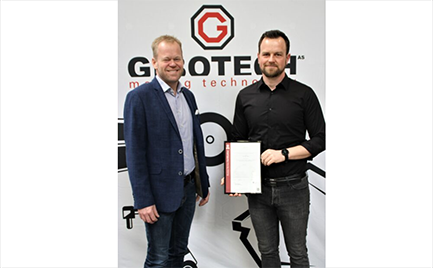
The move to new premises was a good opportunity to thoroughly review our internal workflows and processes. It has long been a major goal of ours to become ISO 9001 certified, but the company’s rapid growth has meant that we’ve had to postpone it several times. That’s why we’re especially pleased that we were certified to ISO 9001:2015 in January.
Henrik Anker, CEO of Gibotech A/S
As the company expands and takes on increasingly large projects—including those in the healthcare sector—there is a growing need for more structured processes, both internally and externally. Consequently, a new QHSE department was established within the company, tasked in 2020 with focusing specifically on developing and implementing the quality management system.
Development of the system
The certification process itself was an intense and educational experience, during which all systems, processes, and procedures were reviewed, evaluated, and, where necessary, adjusted—and finally described in detail so that compliance could be documented.
In January 2020, planning for the system’s implementation began, and the company decided to hire Jan from Procespiloterne as a consultant so that the QHSE department could consult with him on an ongoing basis.
- The quality management system had to be built from the ground up. All existing internal processes have been analyzed by reviewing workflows with employees and managers. Our collaboration with Procespiloterne has been excellent, and Jan has been an incredibly professional partner, says Anders Birkholm, Head of QHSE.
Following the analysis, a risk assessment of the organization’s processes was conducted. The risk assessment was intended to identify the risks associated with project execution. The results of the risk assessment, combined with the data gathered during employee interviews, formed the basis for the new project model, which provides a clear definition of the processes within the organization.
- We are now actively using the new project model from the sales phase through to when the facility is handed over to the service department. This means, among other things, that we focus more on project risk assessment as early as the bidding phase, thereby ensuring that specifications and data are more firmly established during the project’s start-up phase. “This enables us to better translate the customer’s wishes and requirements into the finished product,” says Mikkel Bjerregaard, CSO at Gibotech, .