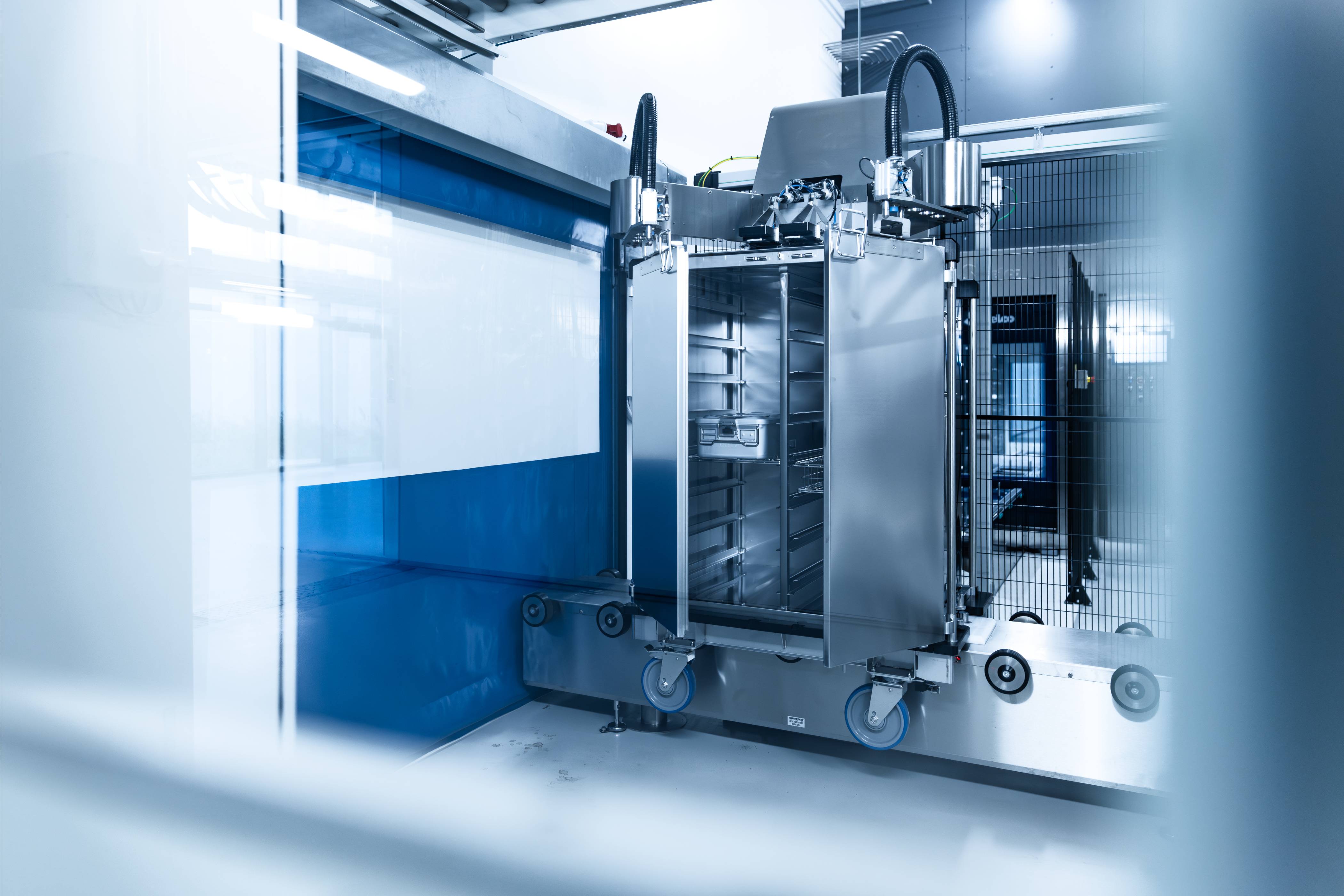
Gibotech is installing the world's most advanced sterilization center
January 14, 2026
Gibotech
Hospitals & Healthcare
You are always welcome to contact us
We are always ready to help and guide you with expert advice and feedback.

In August 2020, the Capital Region of Denmark began operating one of the world’s most advanced central sterilization facilities. The facility is responsible for supplying sterilized surgical instruments to all of the region’s hospitals (except Bornholm Hospital).
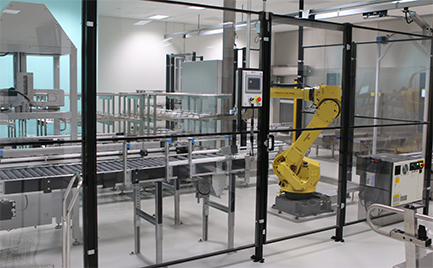
Automated workflow
The central sterilization department must provide both a modern setting and high-quality facilities for the hygiene and reprocessing of surgical instruments, and it should primarily rely on robots and machines to handle the instruments while enabling digital tracking and automated error detection. Finally, the central sterilization department must improve the physical work environment so that employees are spared from heavy and repetitive work.
Overall, the goal has been to establish as automated a workflow as possible at the central sterilization department—without compromising operational reliability—while prioritizing a positive work environment.
This has been a complex, multi-faceted project: From a technological standpoint, we had to integrate many different solutions from various suppliers so they could work together seamlessly, ensuring high uptime and productivity. At the same time, we needed to improve the work environment and indoor climate—without compromising on supply reliability. After all, there must always be a sufficient supply of instruments available at all hospitals in the region. That is the core mission.
Mujtaba Murtaza Abdulridhat, Department Head and Technical Operations Manager at Rigshospitalet’s Central Sterile Supply Department
Improved work environment
The project was originally launched, among other things, to improve the work environment. As a result, heavy and awkward lifting is now performed by robots and AGVs, which have taken over the lifting and transport tasks. Employees can always adjust workstations to the correct height for the tasks that are still performed manually.
- Robots and AGVs lift, push, and transport, so those tasks are now automated. Employees no longer have to perform tasks that place undue physical strain on them. My impression is that my colleagues are happy with the new system, even though there was some skepticism at first. It’s a classic issue that change creates uncertainty, but fortunately we’ve had a good process where a strong sense of commitment has been built among colleagues, and everyone has contributed constructively, says Mujtaba Murtaza Abdulridhat.
No layoffs
Employees at the region’s previous central sterilization units have been offered jobs at the two new central sterilization units. If they did not wish to relocate to a new workplace, they were offered other positions at their previous hospital. In other words, no one has been laid off, even though the work processes are now nearly fully automated, and the same number of employees work there today as before the new central sterilization facility was established.
- We also expect colleagues from other regions to visit us to gain inspiration for the new central sterilization units that are to be established at the large hospitals currently being built in other regions. And we’re also seeing interest from abroad. After all, we now have a solution that has no equivalent elsewhere, concludes Mujtaba Murtaza Abdulridha.
FACTS ABOUT THE REGIONAL STERILIZATION CENTER
- The Regional Sterilization Center is responsible for disinfecting and sterilizing surgical equipment used at hospitals in the Capital Region.
- The central supply department is responsible for supplying sterilized surgical equipment to 30 operating rooms, 200 outpatient clinics, maternity wards, and emergency departments at the region’s hospitals (excluding Bornholm Hospital).
- The control center will be the first in the world to replace many manual processes with robotic technology in order to ensure an ergonomically sound work environment for staff, who have previously had to perform a great deal of heavy lifting.
- The control center must be able to handle up to 1,000 operations per day.
- Up to 46,000 different types of instruments pass through the control center.
- The facility consists of two units—located at Herlev Hospital and Rigshospitalet Blegdamsvej, respectively—ensuring redundancy and, consequently, the reliable sterilization of instruments for the region’s hospitals.
- Each building is approximately 13,000 square meters.
- A workplace for approximately 200 surgical technicians, 20 specialized technicians, and 10 IT support staff.
- Operates 24 hours a day, 365 days a year.
- The Regional Sterilization Center represents a total investment of 1,097.9 million Danish kroner (2020).