How to Improve Hygiene in a Central Sterile Supply Department
January 14, 2026
Hospitals & Healthcare
You are always welcome to contact us
We are always ready to help and guide you with expert advice and feedback.

Hygiene is the be-all and end-all in a central sterilization department. You can significantly improve hygiene standards by automating certain processes—such as the sterile storage area.
The most important task in a central sterilization department is to ensure that surgical instruments are clean, in good working order, and, above all, sterile. This is a matter of patient safety, so it is not a task that is taken lightly.
It is inevitable that staff are needed in a central sterilization department—for example, to check that the instruments are working properly. However, there are tasks in the central sterilization department that could benefit from automation, to the advantage of both staff and patients.
Same task, same result
One of the strengths of automation is that tasks are performed the same way every time. This also ensures the same result.
This feature is useful when containers or wire baskets need to be washed and placed on washing racks. For hygiene purposes, it is important that containers and baskets are placed correctly on the washing racks so that all areas are cleaned.
By using a robot for the task, containers and baskets are placed in the same way every time. And the entire washing rack is used to its full potential.
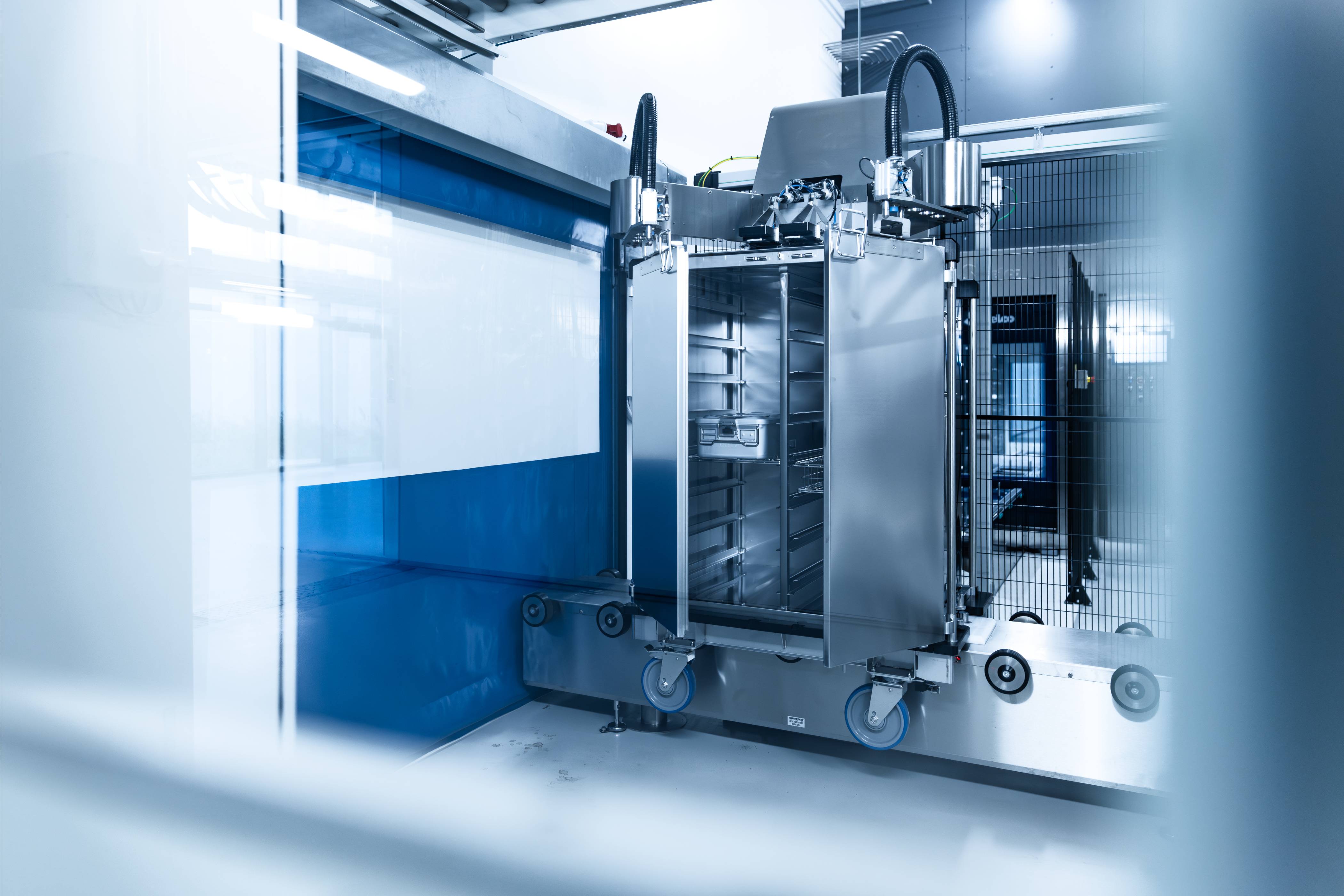
Robots can also be used to open and empty case carts containing soiled surgical instruments. This prevents staff from being exposed to potential infection risks. It also minimizes the risk of unergonomic working postures, as staff do not have to manually remove containers, trays, or baskets.
Automate your warehouse
Another obvious area to automate is the sterile supply room. This is where instruments are stored after they have been sterilized and until they are needed again for another procedure.
That is why it is important to keep the area—or the individual containers or baskets—sterile.
This can be achieved by automating the area. In fact, it can be done in such a way that no one needs to enter the sterile storage area.
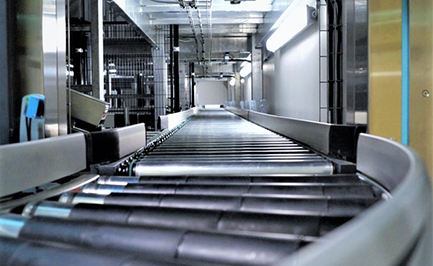
The containers holding the sterilized instruments are transported into the sterile supply room via conveyor belts, where a storage robot picks them up and places them on available shelves. In the same way, they are retrieved and transported out of the supply room when they are needed for a surgery.
This can be combined with a robot placing the containers or baskets into a case cart outside the warehouse and closing the cart’s doors afterward.
This ensures that the sterile environment is maintained all the way to the operating room.
Of course, there are many other automation options in a central sterilization department, and they all contribute in one way or another to maintaining or improving the sterile environment required in the department.