Two central sterilization units for the University Hospital of Schleswig-Holstein
January 14, 2026
Hospitals & Healthcare
You are always welcome to contact us
We are always ready to help and guide you with expert advice and feedback.

About an hour south of the Danish-German border, the University Medical Center Schleswig-Holstein operates two hospitals in Kiel and Lübeck, respectively. Over the past year, both hospitals have automated their central sterilization departments with the help of Gibotech.
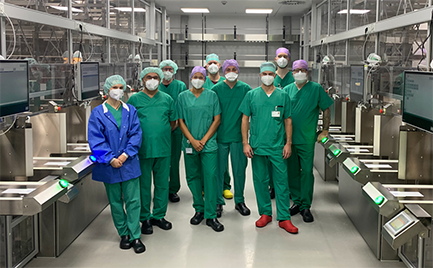
The automated sterilization center and case cart storage system from Gibotech offers us several advantages: The physical workload on our staff has been reduced because we have eliminated some of the physically demanding tasks. Full traceability of the equipment is ensured, and the warehouse is utilized even more efficiently because it is automated—even though it is a “chaotic warehouse.”
Joss Giese, OR Manager at the University Hospital of Schleswig-Holstein
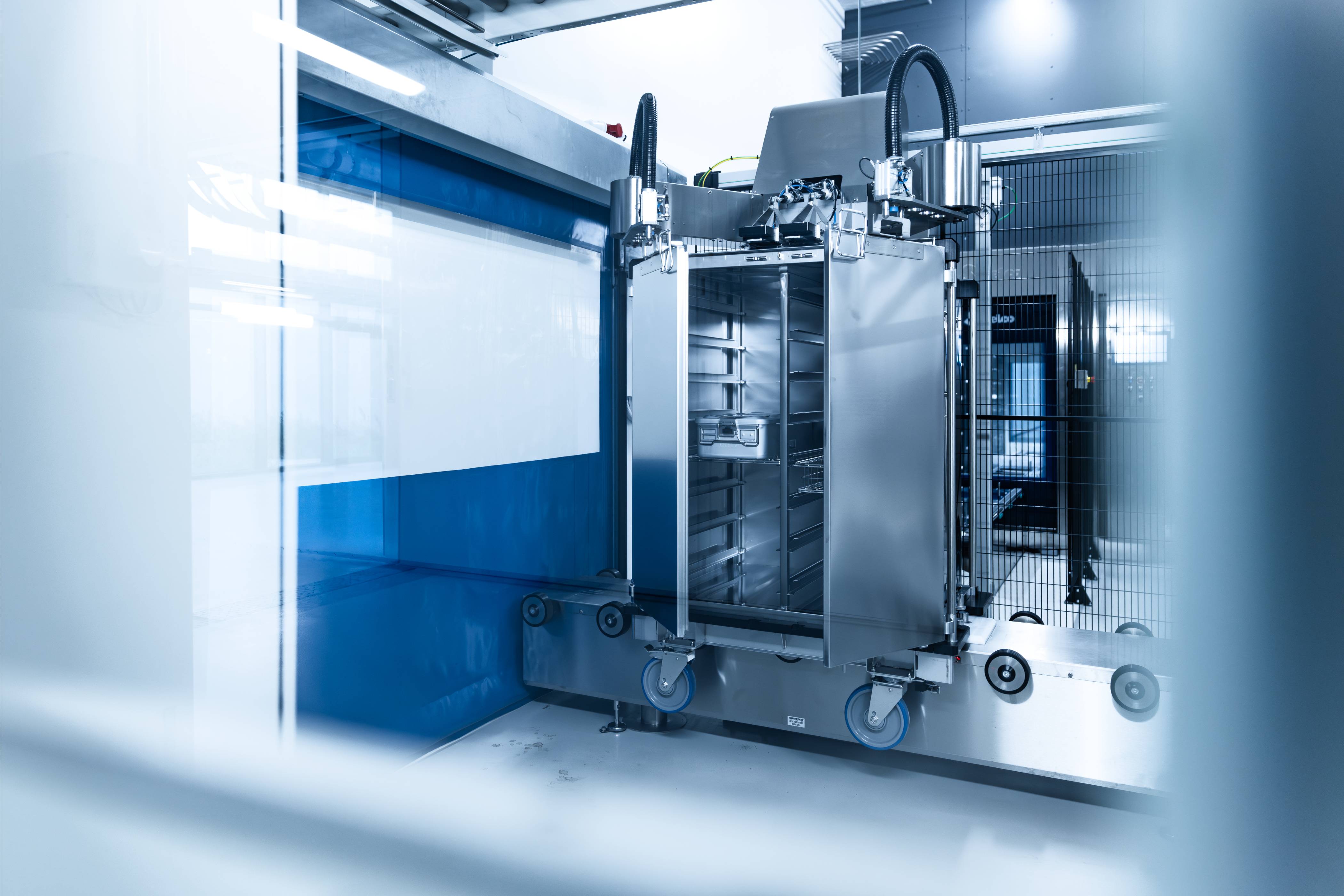
The central sterilization departments in Kiel and Lübeck are semi-automated, which in this case means that Gibotech’s equipment is located in the clean and sterile area. AGVs handle transport between workstations, while conveyor belts and lifts keep the warehouse organized, where the sterile equipment is stored until it is needed for surgery.
Robot takes the strain out of heavy work
Surgical equipment is packed into wire baskets. Depending on the type of equipment and the procedure, the baskets vary in size and weight. And when stacking them, the heaviest one should, of course, go on the bottom. The baskets can be heavy to lift, and stacking them in piles of varying heights can put a strain on the shoulders.
That is why a robot does the job. The robot scans the baskets and then stacks them by weight. There are shelves where the robot can place the baskets if the order in which they are received does not match the order in the stack.
- We are very pleased to have been selected to supply and install central sterilization units at the two hospitals of the University Medical Center Schleswig-Holstein. When we talk about automation solutions for the hospital sector—whether it’s central sterilization units, kitchens, or logistics systems—it’s obviously important to us that the solution meets the customer’s needs. But we also have to take the physical environment into account. This influences how much capacity the warehouse can have and how it must literally be constructed. We have been very satisfied with the overall collaboration with the University Hospital of Schleswig-Holstein on their two central sterilization units, and it is fantastic to see the units in operation. From the very start of the project, there has been a strong willingness on the part of UKSH to adapt the project to make automation easier, says Thomas Aagesen, who is a project manager at Gibotech and on the project in Kiel.
Automation offers benefits for employees
When you automate a hospital ward, you streamline the workflow and standardize procedures. In addition to the benefits of having recognizable procedures that ensure the right tasks are always performed in the correct order, automation also offers advantages for the staff working in the ward.
Employees are spared the heavy physical labor that strains the body and can lead to short- or long-term sick leave. Time is also freed up when employees, for example, no longer have to transport equipment between workstations. Instead, they can devote that time to the specific tasks they were hired to perform.
In addition, there are indirect benefits when humans are not involved in the process. For example, improved safety and a reduced risk of human error. In return, you get a better work environment and increased efficiency.