


Automated Central Sterile Supply Department (CSSD)
In 2011, we created the world’s first automated central sterilization unit. Since then, the experience gained from that project has helped make hospital workflows significantly easier by ensuring the automatic sterilization of instruments and surgical equipment.
With a fully automated central sterile supply department (CSSD), also known as a sterile processing department (SPD), you can ensure that instruments and surgical equipment are sterilized correctly and that proper hygiene is maintained. Because the process follows standard procedures, the results are consistent and quality-assured, and infection control improves significantly.
How does it work?
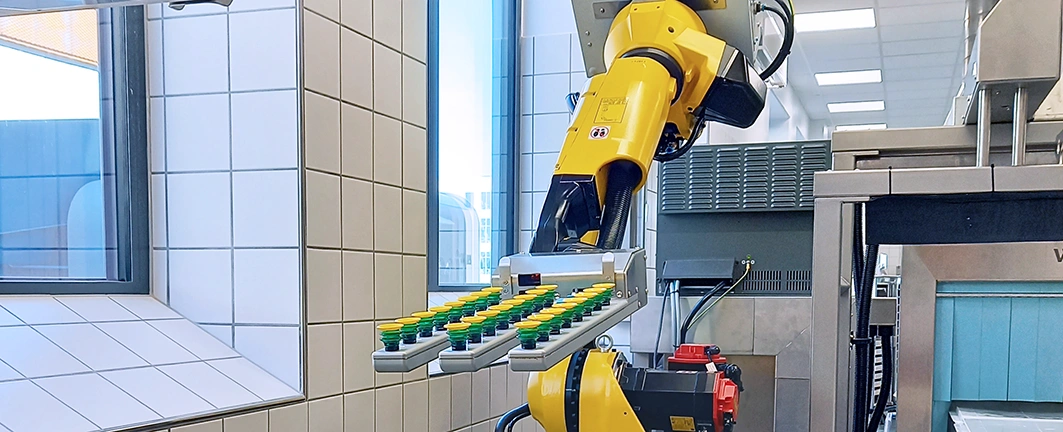
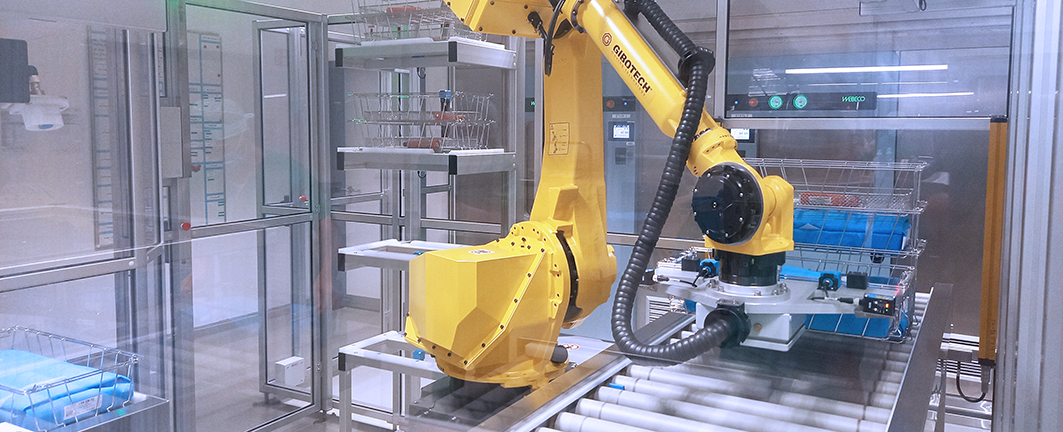
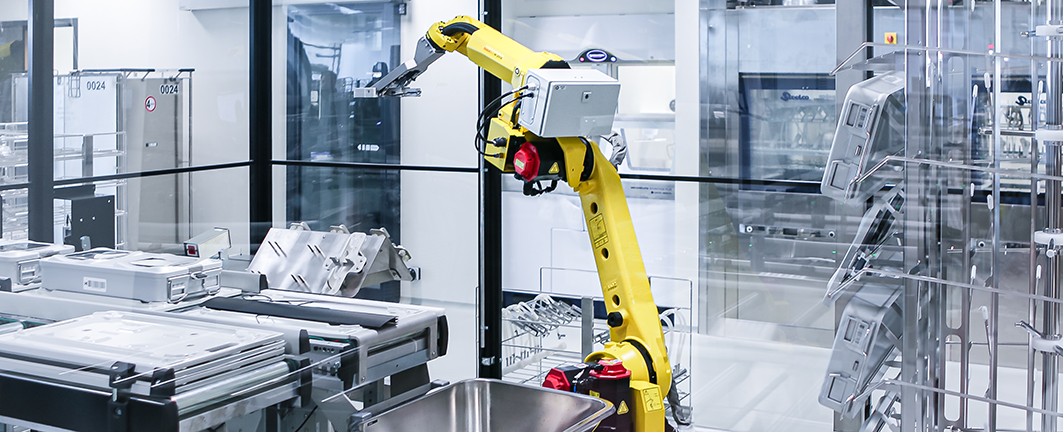
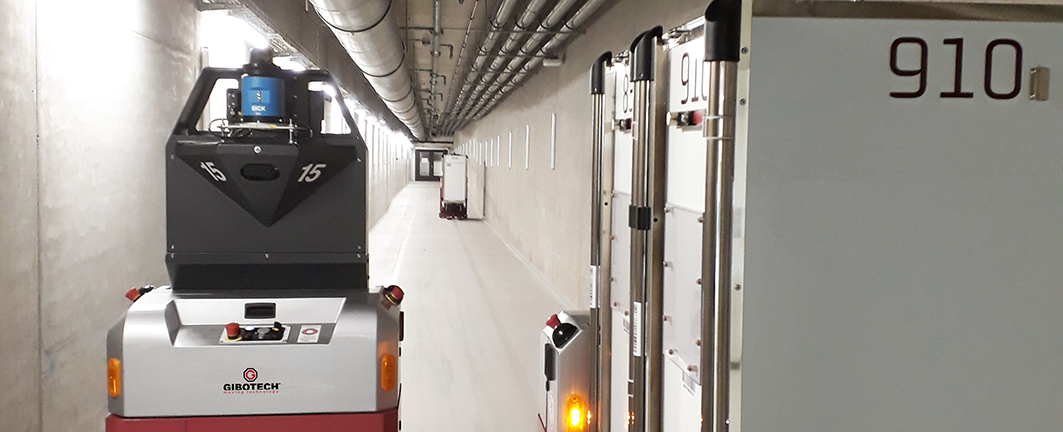
When you automate a central sterilization department, robots, conveyor belts, lifts and other automated systems take over the repetitive, monotonous and physically demanding tasks in sterile processing. In a fully automated CSSD, virtually the entire instrument reprocessing flow is handled by automation – from the arrival of carts with soiled surgical instruments to the packing of sterile instruments into clean carts.
Even the sterile supply room can be automated. With automated sterile storage, robots store containers and wire baskets holding sterile surgical equipment and retrieve them when they need to be loaded onto carts and sent to the operating rooms.
Automating the central sterilization department minimizes the risk of workplace injuries among staff, significantly reduces the need for manual handling, and can extend the service life of sterilized equipment because fewer people come into contact with instruments, baskets, and containers.
The Central Sterile Supply Department will streamline the handling of surgical instruments and will be able to serve all wards, outpatient clinics, and operating rooms throughout the hospital.

See examples of our work
Seeing automation solutions in action in the real world always makes the best impression. That’s why we regularly share videos and insights from our projects, so you can see what a solution looks like once it’s been developed and implemented on-site. Take a look at our case study catalog to learn more.



Better working conditions with an automated central sterilization unit
An automated central sterilization department offers a wide range of benefits for hospital staff. Some of these benefits are more obvious than others. Here is an overview of some of the most notable benefits we’ve heard from staff who use our system on a daily basis:
- - The workstations automatically adjust to the user's height, creating optimal ergonomic working conditions.
- - The robots and automation solutions can operate around the clock without any downtime.
- - Fewer human errors improve patient safety and quality standards.
- - All equipment handling is 100% traceable.
- - Automated inventory management takes up less space and ensures optimal compliance with expiration dates.
- - Employees have significantly fewer heavy lifting tasks on a daily basis, as automation handles this.


Would you like to learn more about how we can help you?
We specialize in streamlining our clients’ workflows and processes through the use of robots and automation, and we’d love to help you too! We’re always open to a no-obligation conversation about your current situation and how our solutions can help improve it.
A valuable partner
At Gibotech, we strive to provide you with efficient and future-proof automation systems. And in an industry that never stands still, it’s all about constantly thinking outside the box. Our skilled specialists therefore always ensure that you receive the right guidance and that you get the perfect solution for your specific needs.
We have extensive experience in delivering flexible, modular solutions designed for a wide range of applications. We combine our expertise with an innovative approach to create solutions that boost your efficiency and reduce operating costs. Once the robot is up and running at your facility, we can also handle maintenance, helping to ensure stable operations.
